Quick answer: Budget for three separate things after finishing a basement: operating expenses, routine maintenance and money set aside for replacements. Build the total from your equipment, local utility rates, service quotes and chosen replacement allowances—not a universal cost per square foot. The adjustable example below totals $1,155.42 per year, or about $96 per month, using hypothetical U.S.-dollar assumptions. It is a budgeting demonstration, not an estimate for your home.
1. Separate existing household expenses from new basement costs
Start with two columns: already paying and added by the project.
For budgeting purposes, distinguish the total cost of caring for the basement from the increase caused by finishing it. An existing sump pump belongs in your household maintenance plan, but its entire operating cost should not automatically be described as a new renovation expense.
Use these categories:
| Budget category | Items to consider |
|---|---|
| Utilities | Dehumidification, added heating and cooling, lighting, electronics and installed pumps |
| Scheduled maintenance | Equipment checks, filters, drainage upkeep and service visits |
| Replacement reserves | Dehumidifier, sump equipment, backup battery, alarms and selected finishes |
| Project-specific additions | Bathroom water use, sewage-ejector servicing, dedicated HVAC or other installed systems |
| Separate ownership checks | Any confirmed insurance or property-tax changes |
Record whether each item is existing, new or shared with the rest of the house. For shared expenses, choose and document a reasonable allocation rather than counting the full household bill twice.
Keep an emergency fund separate from replacement reserves. A reserve is planned saving; it should not be presented as a limit on what an unexpected repair could cost.
2. Calculate dehumidifier electricity from energy use, not capacity alone
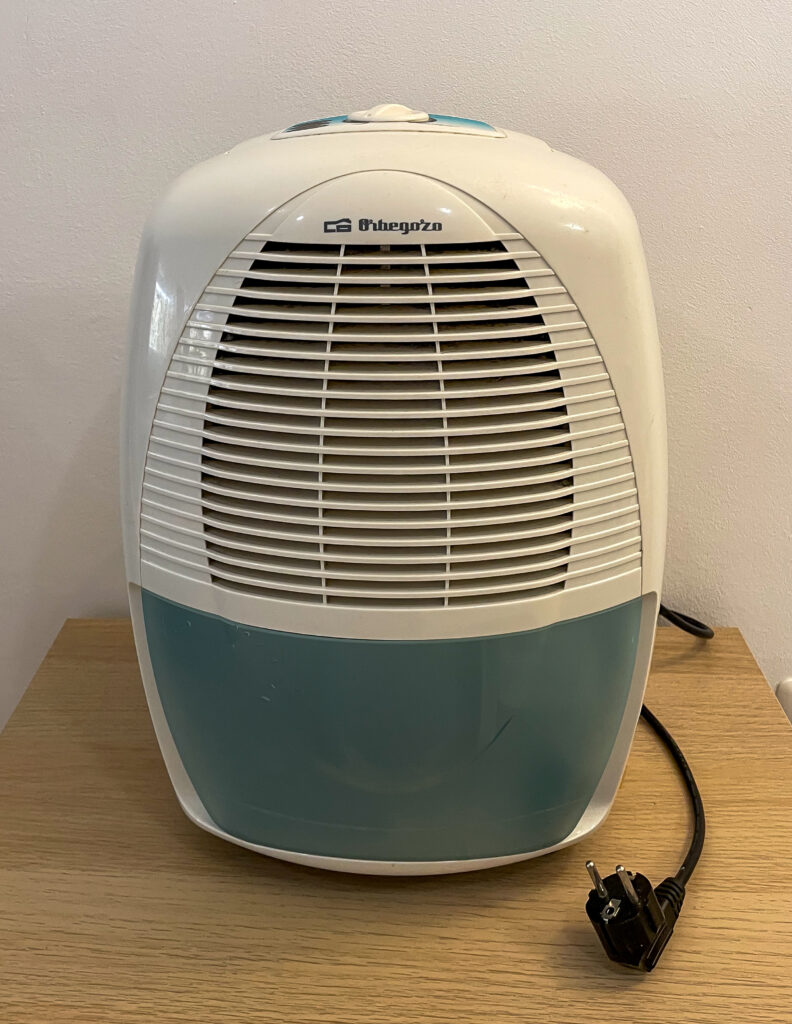
A dehumidifier’s pints-per-day rating describes moisture-removal capacity under specified conditions. Its integrated energy factor, expressed in liters per kilowatt-hour, describes efficiency. Neither number alone tells you its annual operating cost. ENERGY STAR also notes that humidistat-controlled equipment cycles to maintain the selected humidity level. (energystar.gov)
For a preliminary allowance, use:
Annual electricity cost = running watts ÷ 1,000 × operating hours per day × operating days × electricity rate
For example, assume—not measure—a unit averaging 500 watts during operation, running 8 equivalent full-power hours daily for 180 days, at $0.20/kWh:
0.5 kW × 8 hours × 180 days = 720 kWh
720 kWh × $0.20 = $144 per year
“Equivalent full-power hours” does not mean hours plugged in. Replace this assumption with recorded energy use when available, including relevant fan and standby consumption. Do not open equipment or modify wiring to measure it; ask a qualified professional about monitoring hardwired systems.
ENERGY STAR generally identifies 30%–50% relative humidity as an appropriate building range, with lower winter levels sometimes needed to prevent window condensation. Use a humidity gauge to check conditions rather than assuming the control setting represents every corner of the basement. (energystar.gov)
Include upkeep, too. AprilAire identifies filter and drain cleaning as maintenance for its listed E-Series dehumidifiers; its guidance calls for filter cleaning at least every six months. That is a manufacturer example, not a universal schedule for every portable or installed unit. Follow your exact model’s manual. (aprilaire.com)

3. Estimate heating and cooling separately—and use the right utility rate
Ask the HVAC contractor to separate these questions:
- What equipment or distribution changes does the basement require?
- What additional annual electricity or fuel use is being assumed?
- What thermostat settings and occupancy schedule support that estimate?
- Which service tasks are additional, rather than already included in household maintenance?
Avoid assigning a share of the heating bill based only on floor area. Instead, request a project-specific estimate with its assumptions written down. Treat comparisons between pre-project and post-project utility bills as a practical check, not proof of basement-only consumption.
Budget for equipment care as well as energy. The U.S. Department of Energy recommends professional preventive inspections, consulting the owner’s manual and maintaining filters. Its consumer guide identifies spring checks for air conditioners and fall checks for furnaces. (energy.gov)
For electricity, distinguish charges that increase with usage from fixed account charges. For example, Seattle City Light’s published January 1, 2026 residential schedule separates a daily service charge from the per-kWh energy charge and separately identifies possible adjustments. This illustrates rate structure; it is not a current-rate quote for another location—or a substitute for a Seattle customer’s bill. (seattle.gov)
Use your applicable usage-based supply, delivery and adjustment charges, plus relevant taxes. For time-of-use or tiered service, apply the rates that fit the expected consumption. Ask the utility for help if the bill is unclear.
The worksheet below uses $0.20/kWh solely as an adjustable assumption, not a national average or verified local tariff.
4. Budget for sump protection and exterior drainage upkeep
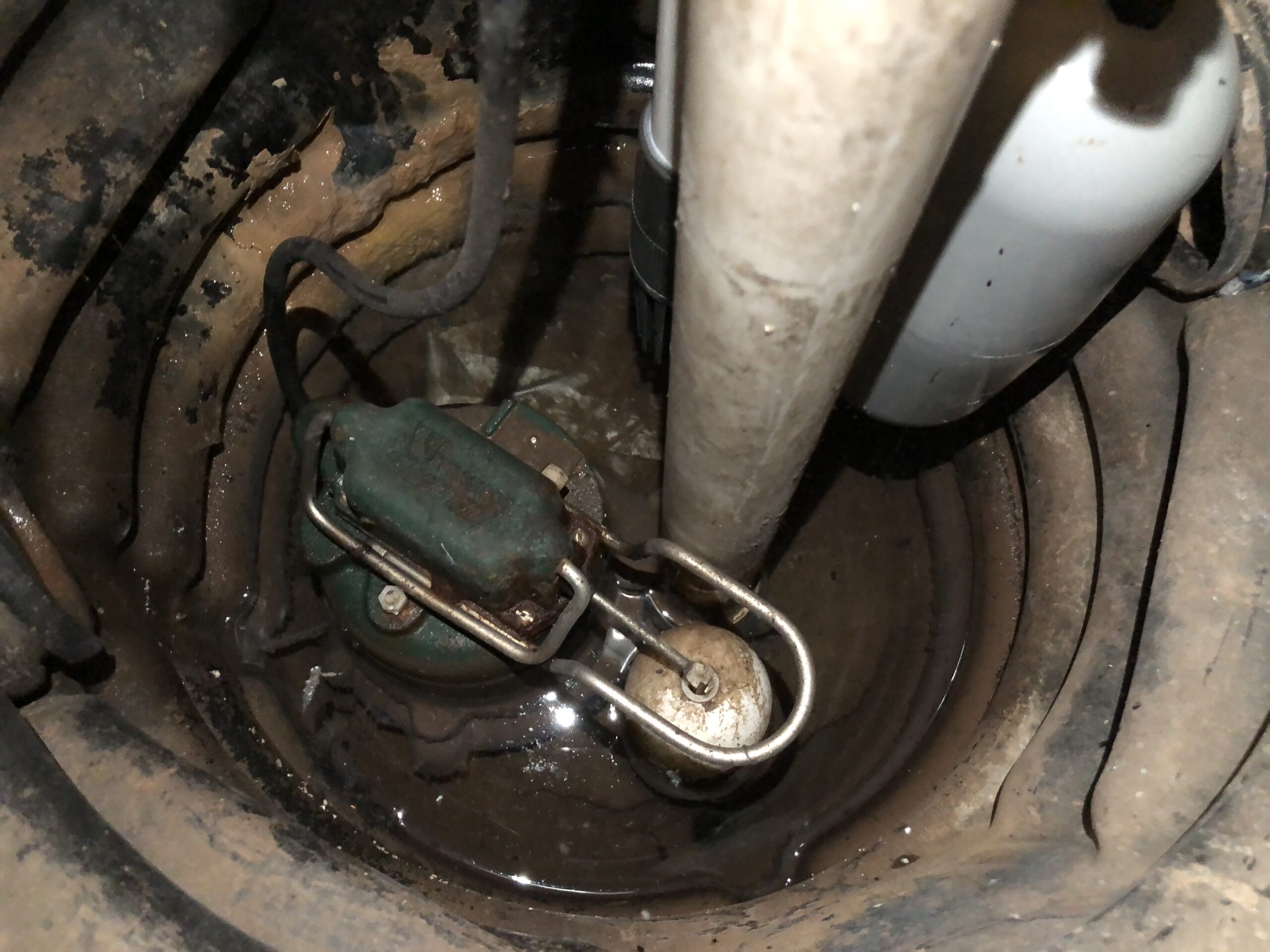
If a sump system is installed, list its components individually: primary pump, backup pump, battery, charger/controller, alarm and any paid monitoring.
Use the actual equipment manual to create the maintenance calendar. For example, Zoeller’s Aquanot Key manual calls for inspection and testing at least every three months and recommends battery replacement every three years. It distinguishes wet-cell battery checks from maintenance-free battery types. Those instructions apply to that system; do not transfer them automatically to different equipment. (zoellerpumps.com)
Ask the installer to identify safe homeowner observations and demonstrate any manufacturer-prescribed checks. Leave electrical repairs, battery servicing you are not trained to perform, pump modifications and work around standing water to qualified professionals.
Keep a log of:
- Inspection and test dates.
- Fault or alarm messages.
- Battery installation date and specified replacement guidance.
- Service findings and corrected problems.
Outside the house, include an allowance for inspecting and maintaining gutters, downspouts and drainage routes. University of Minnesota Extension recommends addressing interior moisture sources and evaluating gutters, downspouts and grading before proceeding to more extensive drainage measures. It also cautions that dehumidification treats symptoms rather than resolving the underlying water problem. (extension.umn.edu)
Do not treat increasing dehumidifier runtime as the automatic answer to new seepage. Investigate the source.

5. Use an adjustable annual-cost worksheet
The following is a fictional budgeting scenario, not measured equipment performance, a contractor quote or a prediction.
All figures are U.S. dollars. Every wattage, operating period, service allowance and replacement target is hypothetical. The assumed operating days do not describe a particular climate.
Operating expenses
| Item | Adjustable assumption | Annual allowance |
|---|---|---|
| Dehumidifier | 0.5 kW × 8 hours/day × 180 days × $0.20/kWh | $144.00 |
| Primary sump pump | 0.5 kW × 0.3 hours/day × 365 days × $0.20/kWh | $10.95 |
| Backup controller and standby use | 5 watts continuously × 8,760 hours × $0.20/kWh | $8.76 |
| Lighting | 40 watts total × 3 hours/day × 365 days × $0.20/kWh | $8.76 |
| Additional heating and cooling | Placeholder pending a project-specific estimate | $240.00 |
| Operating subtotal | $412.47 |
Pump runtime here means 18 minutes of accumulated operation per day, not continuous pumping. Replace that assumption with information appropriate to your system.
Maintenance and replacements
| Item | Adjustable assumption | Annual allowance |
|---|---|---|
| Equipment inspection/service | Chosen planning allowance | $180.00 |
| Drainage and gutter upkeep | Allocated household allowance | $120.00 |
| Filters and small consumables | Chosen planning allowance | $60.00 |
| Dehumidifier reserve | $300 target ÷ 5 saving years | $60.00 |
| Backup battery reserve | $240 target ÷ 3 saving years | $80.00 |
| Pump/system replacement reserve | $800 target ÷ 8 saving years | $100.00 |
| Selected finish repairs | $600 target ÷ 10 saving years | $60.00 |
| Maintenance and reserve subtotal | $660.00 | |
| Combined annual budget | $412.47 + $660.00 | $1,072.47 |
| Monthly amount to budget | $1,072.47 ÷ 12 | $89.37 |
For consistency, this detailed worksheet—not a generic monthly figure—is the amount to use for this particular scenario: about $89 per month.
The example excludes bathroom water and sewer use, entertainment equipment, sewage ejectors, radon-system electricity, insurance changes and taxes. Add applicable items rather than treating an omitted item as free.
To test electricity-rate sensitivity, the listed non-HVAC equipment totals 862.35 kWh annually. At an assumed $0.30/kWh, that portion would cost $258.71, versus $172.47 at $0.20/kWh. Heating and cooling remain a separate placeholder.
6. Build replacement reserves without claiming equipment lifespans
Use this planning formula:
Annual reserve contribution = (replacement target − money already saved) ÷ years until your chosen funding date
The worksheet’s five-, eight- and ten-year periods are saving horizons, not verified service lives. Its dollar targets are arithmetic placeholders, not published prices.
For an existing component, start with its installation date, condition, manufacturer guidance and a current replacement quote. If a replacement target is $600, you have $200 saved and you want the balance funded in two years:
($600 − $200) ÷ 2 = $200 per year
Request replacement quotes that identify the complete scope: equipment, labor, removal, applicable permits, reconnection and finish repairs. Avoid reserving twice for the same component when it is already included in a complete-system target.
For shared HVAC, either maintain one household reserve or document a basement allocation within it. Do not accidentally fund the entire replacement in both budgets.
7. Preserve repair access and review the budget annually
Before approving the finishing layout, ask contractors to show how future technicians will reach and replace equipment. Make this a drawing-review checklist:
- Can filters and service panels be reached?
- Can the sump cover and backup components be serviced?
- Are shutoffs and cleanouts accessible?
- Can equipment pass through the proposed doors?
- Which ceiling or wall areas provide access to concealed services?
- Who will restore finishes after future repairs?
Have the appropriate contractor confirm manufacturer clearances and applicable local requirements. Do not substitute an arbitrary clearance from a general article.
At handover, collect model numbers, manuals, warranties, installation dates and photographs of concealed service locations.
Then review the budget after the first year. Replace assumed energy use with available records, update utility rates and service quotes, and revise reserve targets.
The most useful final checks are simple: nothing counted twice, no unexplained blanks, no assumed equipment lifespan presented as fact, and no moisture problem disguised as a permanent electricity expense.