Quick answer: A wet basement can involve rain or groundwater, condensation, plumbing leaks, or moisture from equipment and household activities. Before paying for waterproofing, document when water appears, where it first appears, and what was happening beforehand. These observations help guide an assessment; they do not establish a diagnosis. More than one moisture source may be present. (basc.pnnl.gov)
This guide is for U.S. homeowners comparing assessment and repair proposals. Use it to prepare a clear problem description—not to select a drainage system without an on-site investigation.
1. Is it safe to investigate—or does the water need urgent attention?
Do not enter standing water to inspect an electrical panel, plug in equipment, or reach a sump pump. For a flooded home, EPA advises waiting until professionals say reentry is safe because of electrical, structural and other hazards. Floodwater may also contain sewage or chemicals. (epa.gov)
Arrange professional help promptly when water involves electrical equipment, suspected sewage, or possible structural instability. PNNL also advises postponing interior inspection where damaged wiring creates a shock risk and addressing structural deterioration before renovation proceeds. (basc.pnnl.gov)
For leaks and spills, EPA recommends drying wet materials within 24–48 hours where possible to help prevent mold growth. Do not postpone safe drying and necessary cleanup while collecting evidence or waiting for several estimates. (epa.gov)
If you can observe safely, take photographs before conditions change. Record:
- The first wet location you noticed.
- Whether water is actively entering or only staining remains.
- The date, weather and recent appliance use.
- Which rooms, belongings and finishes are affected.
Keep those observations separate from conclusions. “Water appeared beside the washer after laundry” is useful evidence. “The foundation has failed” is a diagnosis that observation alone cannot support.
2. When does the wetness appear?
Start a simple event log rather than relying on memory. Include dry periods as well as wet ones, and ask the assessor how each pattern affects the investigation.
| Pattern you observe | Question to ask |
|---|---|
| Water appears during or after rain | “Have you checked roof runoff, surface drainage and possible groundwater entry?” |
| Wetness follows snowmelt or a seasonally wet period | “Could seasonal ground conditions be contributing?” |
| Droplets appear on cool surfaces during humid weather | “Could this be condensation rather than water passing through the wall?” |
| Wetness follows laundry, fixture use or equipment operation | “Should plumbing or condensate drainage be investigated first?” |
| Dampness persists without a clear pattern | “What additional observations or testing would distinguish the possible sources?” |
These are investigation prompts, not a diagnostic key. University of Minnesota Extension identifies rain, groundwater and humid outdoor air among basement moisture sources; PNNL additionally identifies plumbing and mechanical-equipment condensate leaks. (extension.umn.edu)
For every entry, note whether a dehumidifier, air conditioner or basement window was in use. Give contractors the same log so their proposals respond to the same evidence.
Avoid deliberately running water against the foundation or creating another leak to reproduce the problem. Ask the appropriate professional whether controlled testing is necessary.
3. Where does the water appear first—and could it be an indoor leak?
Mark the earliest observed wet point on a rough basement sketch. Distinguish that point from the full area that eventually becomes wet. Photograph walls, ceilings, windows and equipment nearby without opening concealed assemblies.
Ask the assessor to explain the evidence behind the proposed source:
- Near a pipe or fixture: Has a plumbing leak been ruled out?
- Near heating or cooling equipment: Has condensate drainage been checked?
- Below a window: Have the window, well and surrounding drainage been assessed?
- Along a wall or floor edge: What supports the proposed entry pathway?
- Behind a finished wall: What remains unknown without further investigation?
PNNL lists plumbing leaks, improperly discharged equipment condensate, indoor dryer exhaust and open sump crocks among potential interior moisture sources. A waterproofing proposal should not bypass those possibilities. (basc.pnnl.gov)
Common mistake: Assuming every basement puddle requires foundation work.
Instead, ask: “What evidence rules out a plumbing or equipment problem?” If the answer remains uncertain, consider a plumber or qualified HVAC technician before approving unrelated construction.
Do not remove suspected asbestos-containing pipe insulation or other suspect materials to look for a leak. PNNL recommends specialist assessment and treatment where asbestos may be present. (basc.pnnl.gov)
4. What do humidity readings and condensation tell you?
Use a hygrometer to record relative humidity alongside your event log. EPA recommends keeping indoor relative humidity below 60%, ideally 30–50% where possible. A humidity reading describes the air; it does not identify where moisture originated. (epa.gov)
Record the reading location and whether humidity-control equipment was running. Try to make repeat observations under comparable conditions rather than comparing unrelated snapshots.
Condensation deserves particular attention during humid weather. Opening basement windows can introduce warm, humid air that condenses on cool walls and floors. University of Minnesota Extension warns that this can be mistaken for wall leakage. (extension.umn.edu)
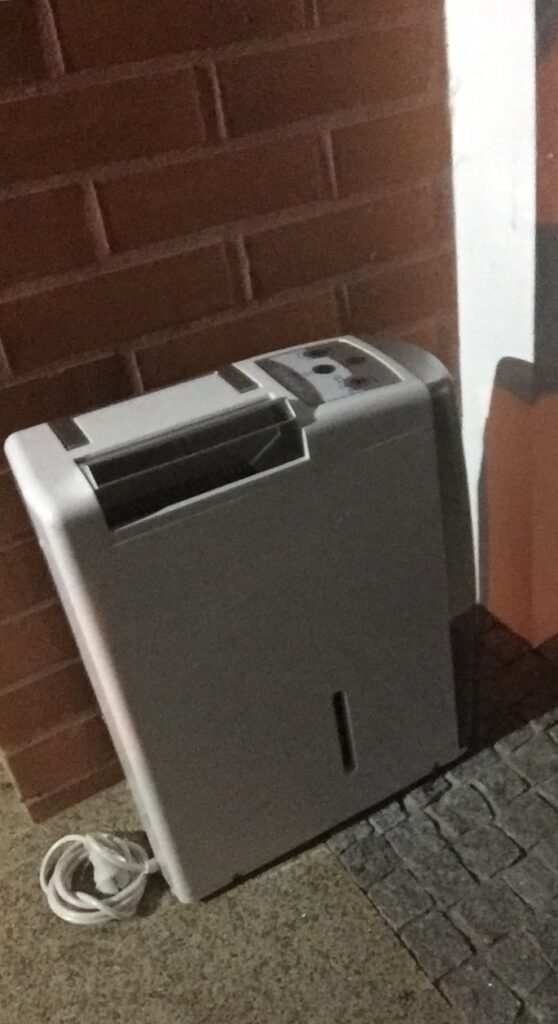
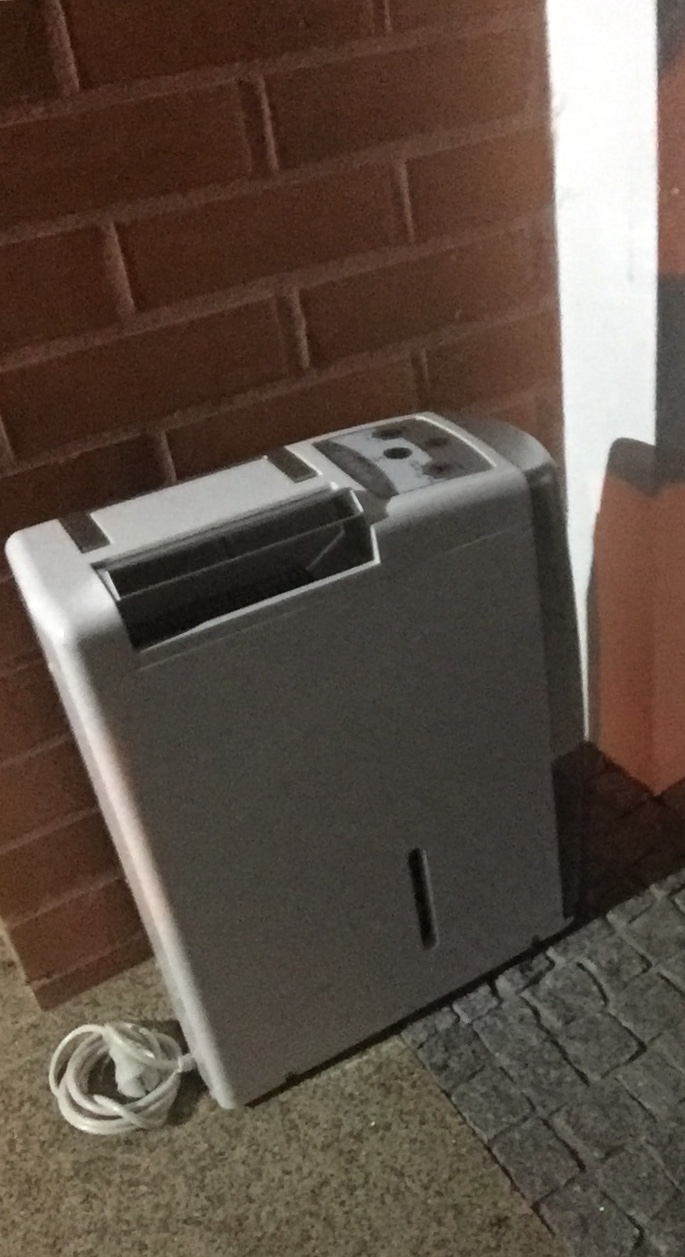
A dehumidifier can help manage airborne moisture. EPA recommends dehumidification when needed, while Extension cautions that it does not provide a complete solution to an underlying basement water problem. Those points address different jobs: controlling humidity is not the same as stopping liquid-water entry. (epa.gov)
Ask a contractor:
- “Is humidity control the main repair or a supporting measure?”
- “What source will continue adding moisture?”
- “How will we check whether the underlying problem was corrected?”
Do not treat a lower humidity reading as proof that a leak has been repaired.

5. What happens to rainwater outside the basement?
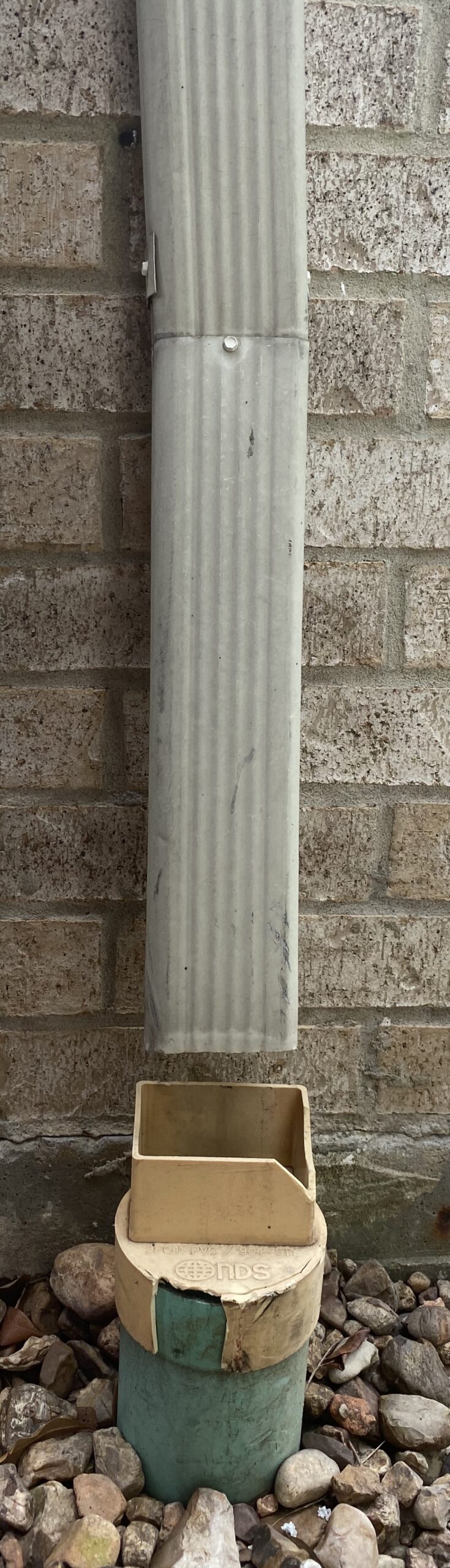
Before comparing major construction proposals, request an assessment of gutters, downspouts and surface grading. EPA notes that correcting basement moisture can sometimes involve redirecting downspout runoff or changing grading, although other problems require more extensive work. (epa.gov)
From a safe location at ground level, note questions for the assessor:
- Do gutters overflow?
- Are downspouts disconnected or visibly damaged?
- Where does each outlet discharge?
- Does water collect beside the house?
- Do nearby paved surfaces appear to direct runoff toward it?
- Does a window well collect water?
Do not assume that an underground downspout connection proves water is being carried away successfully. Ask where it leads and how its condition will be verified.
If drainage work is proposed, request a simple drawing showing collection points, the water’s route and its discharge destination. Ask the contractor to confirm applicable local requirements rather than assuming any nearby drain is an acceptable outlet.
Interior drainage and exterior water control are not interchangeable scopes. Interior systems collect and route water; exterior approaches address water outside the foundation and may involve excavation. Ask why the proposed approach suits your observed problem and what moisture it will leave unaddressed. (extension.umn.edu)
Leave excavation and foundation alterations to qualified professionals.

6. Worked examples: similar symptoms, different next steps
The following are hypothetical decision examples, not documented projects, measured results or repair guarantees. They apply the moisture distinctions described by Extension and PNNL. (extension.umn.edu)
Example A: Summer droplets without an observed entry stream
A homeowner notices droplets on cool surfaces during humid weather, especially with basement windows open.
The useful next question is whether condensation explains the wetness. Humidity management deserves assessment before assuming a foundation drainage system is needed. The check is whether surface wetness improves under comparable humid conditions—not merely whether a dehumidifier collects water.
Example B: One wet corner after rain
Another homeowner records wetness after storms and photographs an overflowing gutter above that corner.
The gutter observation justifies investigating roof runoff first; it does not prove it is the only source. Ask for a defined correction and follow-up observations during later rain. If wetness continues, take the log back to the assessor.
Example C: Recurring water despite surface-drainage corrections
A third homeowner has documentation of completed runoff corrections, but water continues appearing at the basement perimeter.
Ask whether subsurface drainage assessment is now warranted. Compare proposals by the evidence, collection route, discharge arrangement and remaining limitations—not by the shared label “waterproofing.”
A dehumidifier, gutter repair and drainage installation address different mechanisms. None should be sold as a universal cure. (extension.umn.edu)
7. What should a waterproofing estimate explain before you sign?
Request a written proposal that answers these questions:
- What is the suspected source? Separate confirmed observations from assumptions.
- What evidence supports it? Ask for photographs, findings and relevant test explanations.
- What alternatives were considered? Include plumbing, condensation and surface runoff where relevant.
- What exactly is included? Identify locations, materials, equipment, demolition and restoration.
- Where will collected water go? Request the discharge plan and local compliance responsibilities.
- What is excluded? Clarify structural repairs, electrical work, permits, cleanup and finish replacement.
- What maintenance is required? Ask who services equipment and which ongoing expenses remain yours.
- How will success be checked? Agree on follow-up observations and what happens if water returns.
Ask for warranty exclusions, service charges and change-order terms in writing. Compare matching scopes rather than treating the lowest total as an equivalent repair.
Finally, do not enclose an unresolved moisture problem behind new finishes. EPA advises correcting basement moisture before converting the space to living accommodation. It also recommends basement radon testing before remodeling and professional combustion-safety checks when the work changes how air moves through the home. (epa.gov)
Your next step: Assemble a one-page event log, a marked-up basement sketch and dated photographs. Ask each assessor to explain the proposed moisture source before recommending a product or system.